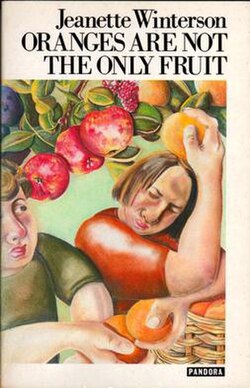
Jeannette Winterson's Whitbread Winner: Exploring Religion and Identity in Oranges Are Not The Only Fruit
First published on March 21, 1985, by Pandora Press in London, Jeannette Winterson's debut novel, Oranges Are Not The Only Fruit, quickly captivated critics and readers alike. This semi-autobiographical masterpiece earned the prestigious Whitbread Award for Best First Fiction, cementing Winterson's place as a powerful new voice in English literature. More than just a coming-of-age story, the novel delves deep into the complex interplay of religion, sexuality, and personal identity, charting a young woman's courageous journey of self-discovery against a backdrop of rigid evangelical faith.
Winterson masterfully blends elements of memoir, fiction, and fairy tale to tell the story of Jeanette, a character who mirrors the author's own upbringing in a Pentecostal Evangelist household. The narrative vividly portrays the intense influence of religious belief on family life and personal development, ultimately exploring themes of condemnation, defiance, and the search for authentic selfhood. Its enduring appeal led to a celebrated television adaptation in 1990, further cementing its cultural impact.
The Crucible of Faith: Growing Up Pentecostal
Jeanette's world is fundamentally shaped by her adoption into a household dominated by an intensely religious mother and a largely absent, hard-working father. Her mother, a formidable figure, is unwavering in her Pentecostal faith, viewing the world through a strictly biblical lens. From an early age, Jeanette is immersed in the church's fervent environment, where prayers for the downfall of enemies are commonplace and every initiative, from missionary work to local gatherings, demands complete devotion. Her mother makes it clear that Jeanette was adopted specifically to be consecrated to God, her life's purpose preordained.
This all-encompassing religious upbringing dictates every aspect of Jeanette's existence. School attendance, initially deemed unnecessary by her mother, only begins after an external mandate. Even a sudden, temporary loss of hearing in her early childhood is interpreted by the church community as a sign of divine rapture, not a medical issue. It takes the intervention of an outsider, Ms. Jewsbury, to recognize Jeanette's genuine struggle and ensure she receives proper medical care. This episode poignantly highlights the church's insular perspective and its potential to overlook individual needs in favor of spiritual interpretation. However, even within this strict environment, there are glimpses of mentorship, such as the kind presence of Elsie, another churchwoman, who offers Jeanette companionship during her hospital stay.
Navigating Identity: Sexuality and Rebellion
As Jeanette matures, she begins to recognize a truth about herself that directly clashes with her upbringing: her attraction to women. This dawning awareness sets her on a collision course with her mother and the church's deeply ingrained beliefs. Her early attempts to forge connections, such as her kinship with two women who run the local paper store, are swiftly met with her mother's stern disapproval and accusations of "Unnatural Passions." The condemnation is swift and absolute, painting any deviation from heterosexuality as a grave sin.
The novel masterfully portrays the immense internal conflict Jeanette faces as she grapples with her burgeoning sexuality in an environment that demands conformity. The church, meant to be a source of community and moral guidance, becomes a source of judgment and exclusion. When Jeanette refuses to repent for her "sin," she faces the ultimate consequence: expulsion from her home. This pivotal moment is not merely a rejection by her family, but a profound act of defiance. It underscores the immense power religious beliefs and community can wield over personal and familial affairs, but also the extraordinary courage required to choose one's authentic self over familial acceptance. For a deeper dive into this theme, consider reading our related article: Oranges Are Not the Only Fruit: Faith, Sexuality, and Defiance.
A Tapestry of Genres: Memoir, Myth, and Meaning
One of the most distinctive and celebrated aspects of Oranges Are Not The Only Fruit is Jeannette Winterson's innovative narrative structure. Far from a straightforward autobiography, the novel is a brilliant pastiche of genres, seamlessly weaving together elements of memoir, traditional fiction, and fantastical fairy tales. This multi-layered approach enriches the reader's experience, providing profound insights into Jeanette's inner world and the complex themes at play.
The interjected fairy tales and allegorical stories serve a crucial purpose. They are not mere digressions but metaphorical frames that help Jeanette (and the reader) process her emotions and experiences. When direct narrative might feel too raw or explicit, these mythical tales externalize her internal struggles, fears, and desires. They allow Winterson to explore the subjective nature of truth and reality, demonstrating how storytelling itself can be a powerful tool for understanding and shaping one's identity. This unique narrative voice not only makes the novel incredibly engaging but also invites readers to consider the power of myth and imagination in navigating personal and societal challenges.
Symbolism Unleashed: Beyond the Oranges
The title itself, Oranges Are Not The Only Fruit, serves as the novel's most potent and overarching symbol, inviting readers to look beyond superficial interpretations. At its core, the title represents a profound challenge to societal norms and expectations, particularly regarding sexuality. In the context of the story, "oranges" symbolize heterosexuality – the widely accepted, dominant societal standard. By stating that these are "not the only fruit," Winterson powerfully asserts the validity and existence of other forms of love and identity, particularly lesbianism.
This symbolism is further elaborated within the plot. After a significant relationship ends, Jeanette is offered an orange by Melanie. Her refusal to accept it is a quiet yet firm declaration of her unwavering commitment to her own path and desires, regardless of external pressure or expectations. It signifies her resolute choice to embrace her authentic self, rather than conforming to what others might want for her. The orange thus becomes a marker of conformity versus genuine self-expression. To delve deeper into the layers of meaning behind this powerful symbol, explore our article: Unpacking the Symbolism: Oranges in Winterson's Debut Novel.
Legacy and Lasting Impact
Since its publication, Oranges Are Not The Only Fruit has remained a significant and influential work. Its Whitbread Award was merely the beginning of its critical acclaim, which has endured for decades. The novel's adaptation for television in 1990 brought its compelling narrative to an even wider audience, solidifying its place in popular culture.
Jeannette Winterson's debut continues to resonate with readers because it tackles universal themes with extraordinary courage and originality. It is a vital contribution to LGBTQ+ literature, offering a nuanced and deeply personal portrayal of coming out and finding one's identity in a hostile environment. Furthermore, the novel serves as a powerful commentary on religious fundamentalism, exploring its capacity to both nurture and constrain the human spirit. Winterson's distinctive literary voice, her ability to blend humor with pathos, and her groundbreaking narrative techniques ensure that Oranges Are Not The Only Fruit remains a cornerstone of contemporary fiction, inspiring discussions about faith, freedom, and the enduring power of self-acceptance.
In conclusion, Jeannette Winterson's Oranges Are Not The Only Fruit is far more than just a Whitbread Award-winning novel; it's a testament to the human spirit's resilience. Through its vivid portrayal of a young girl's life in a fervent religious community and her subsequent journey to embrace her true identity, Winterson crafts a narrative that is both deeply personal and universally resonant. Its innovative blend of genres and potent symbolism combine to create a lasting literary experience that continues to provoke thought, inspire defiance, and celebrate the diverse fruits of human experience.