Decoding the Title: Oranges as Societal Norms in Winterson's Debut
Jeannette Winterson's seminal debut novel, Oranges Are Not The Only Fruit, published in 1985, is far more than a simple coming-of-age story. It's a vibrant, often challenging, exploration of identity, faith, and rebellion, deeply rooted in the author's semi-autobiographical experiences. From its distinctive title to its richly layered narrative, the novel invites readers to peel back layers of meaning, particularly regarding its central symbol: the orange. This work, which earned Winterson the prestigious Whitbread Award for Best First Fiction, immediately established her as a powerful and unique voice in contemporary literature, later adapted into a celebrated television series in 1990.
The story follows Jeanette, a young girl adopted into a fervent Pentecostal Evangelist household in Northern England. Raised within the strict confines of her church, Jeanette's world is meticulously shaped by religious doctrine, fervent sermons, and her mother's unyielding faith. However, as she navigates childhood, adolescence, and early adulthood, Jeanette confronts her burgeoning lesbian sexuality, a truth that places her in direct opposition to everything her community and family believe. The novel masterfully blends memoir, fiction, and interjected fairy tales, creating a compelling narrative that is both deeply personal and universally resonant.
The Heteronormative "Orange" and "The Other Fruit"
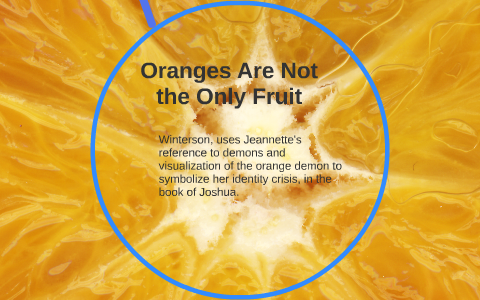
The most prominent and frequently discussed symbolism in Oranges Are Not The Only Fruit revolves around the orange itself, directly highlighted by the novel's title. On a foundational level, the orange represents the conventional, the expected, the norm that society, and particularly Jeanette's religious community, dictates. In the context of her life, this "orange" is undeniably heterosexuality – the path deemed natural, righteous, and the only acceptable option for a woman of God.
Jeanette, however, embodies "the other fruit." From an early age, she instinctively understands that she does not fit this prescribed mold. Her natural inclination towards women sets her apart, making her an outsider in a world that demands conformity. This powerful metaphor extends beyond sexuality, encompassing any form of non-adherence to societal standards. It champions the idea that diversity in human experience, identity, and love is not only valid but essential. Winterson provocatively suggests that to limit oneself to only the "orange" is to miss the vast, rich orchard of possibilities.
This symbolism becomes particularly poignant when we consider Jeanette's upbringing. Her mother's unwavering belief system, often expressed through prayers for the downfall of perceived enemies and zealous participation in church initiatives, creates an environment where deviation is not just frowned upon, but seen as outright sin. The discovery of Jeanette's "unnatural passions" with women, such as Elsie or Melanie, is met with condemnation and judgment, reinforcing the societal pressure to choose the "orange." The narrative starkly illustrates the profound influence that religious beliefs and community structures can exert on personal family affairs, often at the expense of individual happiness and authenticity. For a deeper dive into these themes, consider reading Oranges Are Not the Only Fruit: Faith, Sexuality, and Defiance.
Rejecting the Conventional: A Moment of Defiance
The symbolism of the orange is not merely titular; it is woven into the plot itself, providing a concrete example of Jeanette's journey toward self-acceptance. At one critical juncture, after her relationship with Melanie has ended, Melanie offers Jeanette an orange. Jeanette's refusal to accept it is a pivotal moment, a quiet yet profound act of defiance and self-assertion. It signifies her unwavering commitment to her own truth, even when faced with the temptation to revert to a more comfortable, or expected, path.
This refusal isn't simply about rejecting a fruit; it's about rejecting a specific way of life, a particular expectation, and potentially, a return to a relationship that might compromise her authentic self. It cements her understanding that she will continue to do what she believes is right, regardless of external pressures or the desires of others. This scene underscores the novel's central message: true liberation comes from embracing one's unique identity, even if it means standing alone against a tide of conventionality.
A Tapestry of Faith and Found Family
The narrative of Oranges Are Not The Only Fruit is intricately woven with threads of fervent faith and the complex dynamics of Jeanette's adoptive family. Her mother, a formidable figure defined by her intense religious devotion, dominates Jeanette's early life. She is a woman who, upon adopting Jeanette, explicitly states her intention to dedicate her life solely to God, shaping every aspect of Jeanette's existence around church doctrines and expectations.
The Pentecostal Upbringing and Its Grip
Jeanette's childhood is steeped in the rituals and beliefs of her Pentecostal Evangelist church. Her mother's faith is all-consuming, dictating everything from daily prayers to communal initiatives. This environment provides Jeanette with a unique, often isolating, lens through which to view the world. The church becomes the ultimate arbiter of morality, where numbers like "seven" hold holy qualities and "two" can harbor sin, as preached by Pastor Finch, subtly hinting at Jeanette's own perceived transgressions.
This strict upbringing, while foundational to Jeanette's character, also highlights the intense pressure to conform. The community's vigilant watch and swift judgment demonstrate the potential for religious institutions to control and define individual lives, often leaving little room for personal exploration or difference.
Whispers of Dissent and Support
Despite the overwhelming influence of her mother and the church, subtle cracks appear in the monolithic structure of Jeanette's world. Early on, she finds an unexpected kinship with two women who run the local paper store, only for her mother to ban her from seeing them, labeling their relationship "Unnatural Passions." These early experiences underscore Jeanette's intrinsic difference and the societal mechanisms designed to suppress it.
Even within the church's shadow, Jeanette encounters individuals who offer glimpses of genuine care or alternative perspectives. During a period of temporary hearing loss when she is seven, initially misconstrued by the church as a sign of her being "in rapture of the Lord," it is Ms. Jewsbury, not her mother, who recognizes her struggle and advocates for her medical care. Later, a church woman named Elsie provides companionship and acts as a mentor during Jeanette's recovery, offering a softer, more understanding presence than her often-absent mother. These small acts of kindness and recognition stand in stark contrast to the rigid doctrines of the church, offering Jeanette brief but vital moments of connection and validation outside the prescribed "orange."
Genre Blending: A Unique Narrative Voice
One of the most remarkable aspects of Oranges Are Not The Only Fruit is Jeannette Winterson's audacious and brilliant blending of genres. The novel transcends traditional categorization, weaving together elements of memoir, fiction, and fairy tale/fantasy to create a narrative tapestry that is as rich and complex as Jeanette's own journey.
Memoir, Fiction, and Fairy Tale Intertwined
The novel is famously semi-autobiographical, drawing heavily on Winterson's own experiences of being adopted and raised in a Pentecostal community while grappling with her sexuality. This Jeannette Winterson's Whitbread Winner: Religion and Identity provides a raw, authentic core, grounding the story in the emotional truth of a life lived. However, Winterson takes liberties, expanding events, inventing dialogue, and shaping characters to serve the narrative's artistic and thematic goals, thus creating a work that is also undeniably fiction.
The most distinctive stylistic choice, however, is the interjection of fairy tale and fantasy elements. These allegorical tales, often mirroring Jeanette's emotional state or exploring her dilemmas through fantastical scenarios, provide a unique lens for understanding her experiences. They allow Winterson to delve into complex psychological landscapes and societal pressures with a playful yet profound metaphoric touch. For instance, a fairy tale might explore the nature of love, betrayal, or the struggle against oppressive forces in a way that is both relatable and universally resonant, while simultaneously distancing the raw pain of the autobiographical elements. This genre blending not only showcases Winterson's literary prowess but also underscores the often surreal and dreamlike quality of a childhood spent navigating extreme religious dogma and profound personal difference.
This narrative approach enriches the reader's experience, allowing for a deeper, more nuanced understanding of Jeanette's internal world. It demonstrates how stories, both real and imagined, can help individuals make sense of their emotions, challenge established norms, and ultimately forge their own identities.
Beyond the Fruit: Enduring Themes and Legacy
Oranges Are Not The Only Fruit is more than just a story about a girl; it's a testament to the enduring power of the human spirit to defy, to question, and to embrace one's authentic self. Jeanette's journey, from a devout child to an ostracized lesbian, culminates not in defeat, but in a profound act of self-acceptance and liberation.
Defiance and Self-Acceptance
Jeanette's ultimate refusal to repent for her sexuality, despite facing profound condemnation and eventual expulsion from her home and church, is the emotional crescendo of the novel. Her choice to stand firm in her truth, even when it means losing her family and community, transforms her into a symbol of defiance. This powerful narrative resonates deeply, particularly for those who have navigated similar struggles with identity, faith, and societal expectations. The novel serves as a powerful reminder that while belief systems can offer comfort and community, they can also become restrictive, necessitating a courageous break for individual freedom.
The novel's lasting impact lies in its celebration of "the other fruit" – the acknowledgment that there are countless ways to live, love, and believe, all equally valid. It challenges readers to look beyond superficial appearances and prescribed norms, advocating for a world where diversity is not just tolerated, but celebrated. This message continues to be incredibly relevant in contemporary discussions about LGBTQ+ rights, religious freedom, and the universal journey of self-discovery.
Winterson's Impact and Critical Acclaim
Jeannette Winterson's debut did more than just win awards; it broke new ground. Its blend of autobiography, fiction, and magical realism, coupled with its unflinching portrayal of queer identity within a religious context, secured its place as a significant work in modern literature. The novel’s critical success and subsequent television adaptation cemented its status as a cultural touchstone, opening doors for broader conversations about gender, sexuality, and faith in the public sphere.
Conclusion
Oranges Are Not The Only Fruit remains a vital and compelling read, inviting generations of readers to question convention and embrace individuality. Through the potent symbolism of the orange, Jeannette Winterson crafts a narrative that is both deeply personal and universally resonant, exploring the challenging, yet ultimately liberating, journey of self-acceptance. The novel's enduring message is a powerful one: the world is rich with diverse experiences, and true fulfillment lies in discovering and celebrating all the "fruits" it has to offer, not just the ones society prescribes.